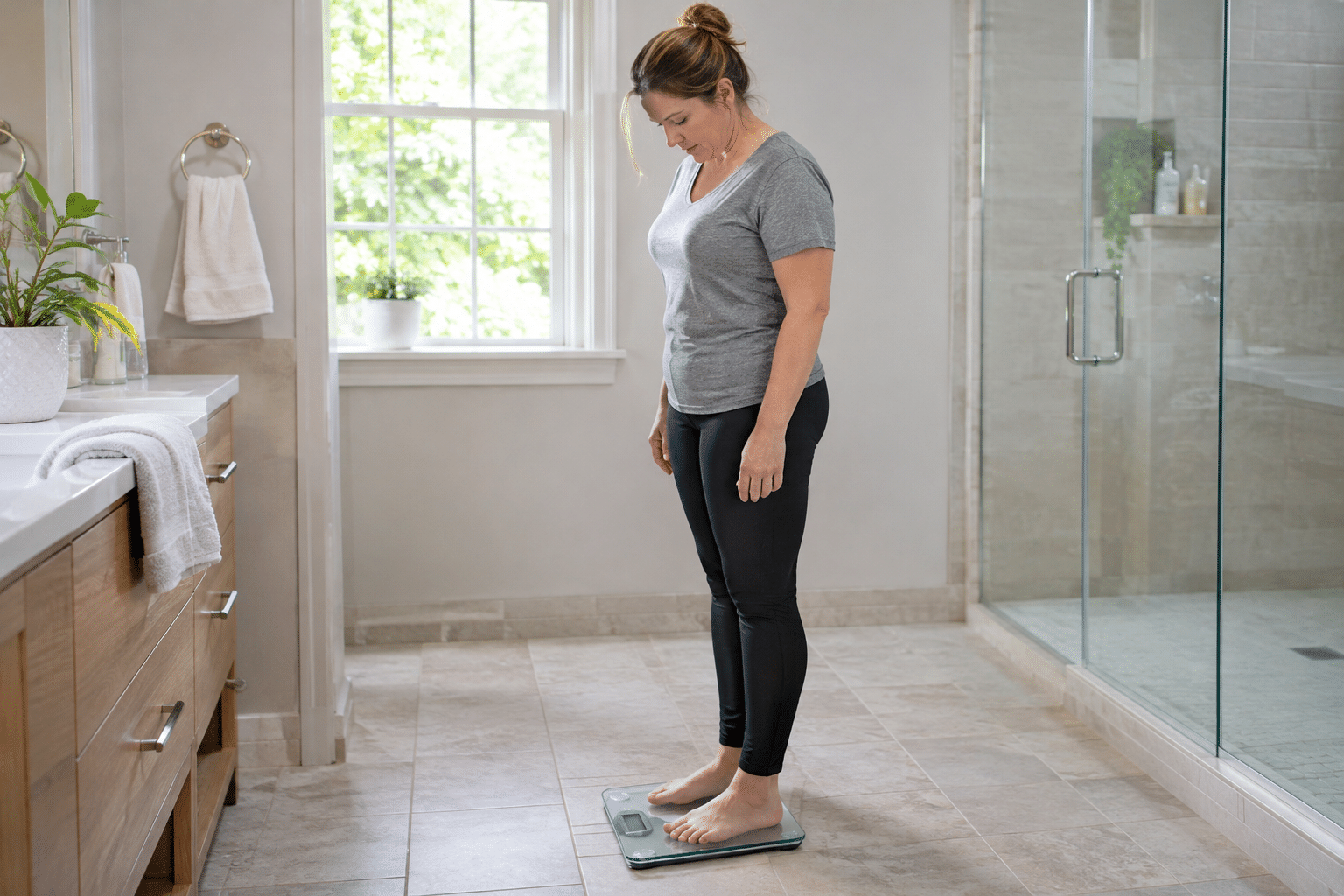
You’re eating much like you always have, keeping busy, and trying to make healthy choices. Yet your jeans feel tighter, your energy is lower, and the habits that once helped you manage your weight seem less effective. Menopause may be playing a part.
Sound familiar? Many women experience these frustrations during their 40’s and 50’s. Weight loss for women over 40 can require a different approach as sleep, body composition, hormones, and daily responsibilities change. Understanding these shifts can help you move forward with more confidence and less self-blame.
Why Does Weight Management Change After 40?
Midlife weight changes rarely have one cause. Aging can bring a gradual loss of muscle, which reduces the energy your body uses at rest. Meanwhile, declining estrogen during menopause can encourage fat to accumulate around the abdomen. Poor sleep, stress, and changes in activity can also contribute.
That means a changing waistline doesn’t automatically mean you’ve stopped taking care of yourself. Your body and circumstances may simply need a fresh approach.
Rather than returning to another restrictive diet, consider what has changed: Are you sleeping poorly? Drinking less water? Spending more time sitting? These observations provide a useful starting point.
Make Strength Part of Your Routine
Exercise supports health throughout midlife, and strength training deserves particular attention. Resistance exercises can help counter the loss of muscle that accompanies aging and menopause.
That doesn’t mean you need to become a gym enthusiast. Resistance bands, appropriately chosen weights, and bodyweight movements can provide a starting point. Walking, swimming, or cycling can complement strength work.
For weight loss for women over 40, a manageable routine is often easier to maintain than an exhausting schedule. Start at a level that suits your abilities and build gradually.
Give Sleep and Stress Some Attention
When night sweats interrupt your sleep, finding the energy to cook or exercise can feel difficult. Menopause-related sleep disturbances can also make weight management harder.
Notice the situations that make your routines harder to follow. Perhaps you snack while finishing work late, or reach for food when you finally sit down after caring for everyone else.
Planning an evening meal, taking a short break, or establishing a consistent bedtime can be useful first steps. If menopause symptoms regularly disrupt your sleep, discuss them with your healthcare provider.
Find Menopause Support That Fits Your Life
You don’t have to navigate menopause weight loss alone. Personalized support can help you identify patterns, set realistic goals, and adjust your approach when life gets complicated.
Dr. Sher is a Toronto-based Weight Loss and Lifestyle Consultant offering a virtual online program that incorporates intermittent fasting and support for eating behaviours linked to emotional and stressful triggers. Your starting point should reflect your health, preferences, and daily routine. Contact Dr. Sher to discuss her approach to weight loss for women over 40 and whether her program fits your goals.